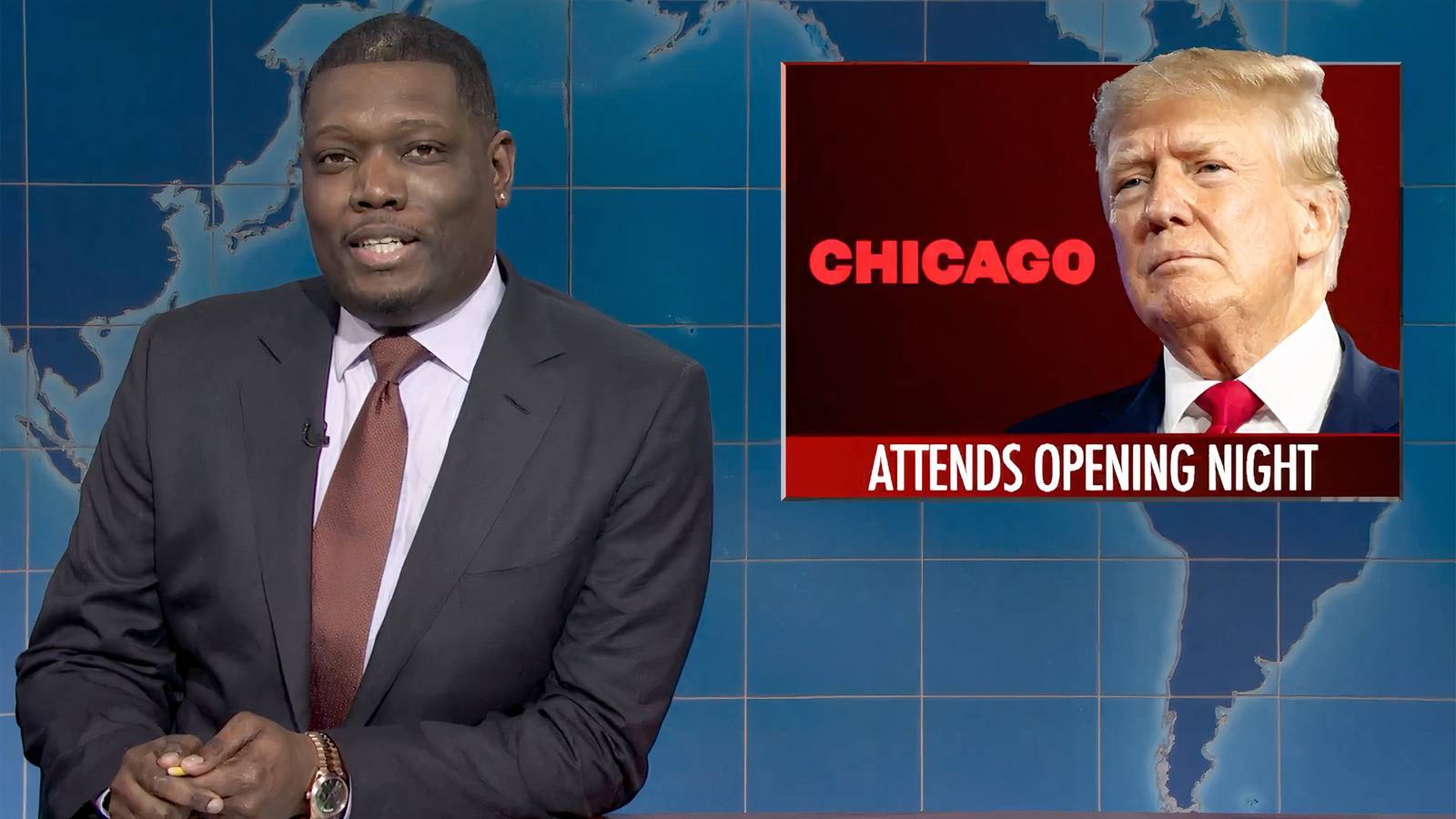
The Fine Line of Laughter: Dissecting SNL's Controversial Trump Joke
For decades, Saturday Night Live (SNL) has served as America's comedic mirror, reflecting and often skewering the political landscape through sketches, impersonations, and its iconic "Weekend Update" segment. However, a recent comment by co-host Michael Che during "Weekend Update" concerning former President Donald Trump ignited a firestorm of criticism, forcing audiences and critics alike to question whether the show, known for its edgy satire, had finally gone a step too far. The incident quickly became a flashpoint in the ongoing debate about the boundaries of political humor in an increasingly polarized society.
Michael Che's Comment: A Historical Echo or Reckless Rhetoric?
The controversy unfolded when Michael Che delivered a joke referencing former President Donald Trump's reported plan to attend a performance of the musical "Chicago" at the Kennedy Center. Che quipped, "The president is going to the theatre, mean, what’s the worst that can happen?” The studio audience responded with laughter, a reaction typical of a late-night comedy show. However, the online sphere, particularly platforms like X (formerly Twitter), erupted with immediate and intense backlash. Many viewers quickly recognized the sinister undertones of the remark.
The line was widely interpreted as an indirect, yet unmistakable, reference to one of the most tragic events in American history: the assassination of President Abraham Lincoln in 1865. Lincoln was shot by John Wilkes Booth while attending a play at Ford's Theater. The historical parallel immediately transformed Che's seemingly innocuous joke into something far more unsettling for a significant portion of the audience. Furthermore, critics were quick to point out that Donald Trump himself had survived a prior assassination attempt, adding a layer of perceived danger and insensitivity to the jest.
This particular comment by Michael Che became a critical moment, leading many to believe that Why SNL's Trump Theater Joke Sparked Widespread Outrage & Ethical Debate, sparking an ethical debate that transcended typical comedic critique.
A Bipartisan Outcry: Why Saturday Night Live Received Backlash For A Controversial Donald Trump Joke
The criticism that followed the "Weekend Update" segment was remarkably broad, extending beyond typical political divides. It wasn't just staunch Trump supporters who voiced their displeasure; many individuals who do not endorse the former president also expressed significant concerns. This bipartisan condemnation underscored the feeling that the joke had crossed a universally accepted ethical boundary.
Online, comments ranged from accusations of irresponsibility directed at SNL's writers to shock that NBC allowed such a segment to air. One user articulated a widely held sentiment, writing, "There’s dark humour but there’s also taking it to far humour." This statement encapsulates the core of the debate: where does satirical commentary end and dangerous incitement begin? The consensus among many critics was that joking about a sitting or former president being killed, especially in a country grappling with high rates of gun violence and deeply entrenched political divisions, felt less like humor and more like a dangerous flirtation with political violence.
Beyond the content of the joke itself, the audience's reaction also drew ire. Commenters called the laughter and applause "tone-deaf," suggesting a lack of sensitivity to the gravity of the historical reference and the current political climate. This collective reaction from both viewers and the live audience amplified the controversy, highlighting a perceived disconnect between the show's intent and its public reception. Indeed, SNL's Satire Under Fire: The Trump Joke That Crossed the Line, marking a significant moment in its history of political humor.
Ultimately, Saturday Night Live Received Backlash For A Controversial Donald Trump Joke because it tapped into a raw nerve. It wasn't just about political affiliation; it was about the responsibility of public figures and media institutions to avoid language that could be interpreted as normalizing or trivializing violence, particularly when directed at political leaders.
SNL's Shifting Satirical Landscape: From Caricature to Controversy
SNL has a storied history of engaging with and lampooning presidents, from Gerald Ford's clumsy portrayal by Chevy Chase to George W. Bush's folksy charm captured by Will Ferrell. Donald Trump himself has been a frequent target of the show's comedic lens, often portrayed with exaggerated mannerisms and catchphrases. Notably, during a previous election cycle, SNL struggled to accurately capture the essence of Trump's political movement. Darrell Hammond's initial portrayal, while comedic, didn't quite resonate with the evolving political reality.
The show's approach shifted dramatically with the introduction of Alec Baldwin as Donald Trump. Baldwin's "gargoyle scowl," "wavy blonde hair," and exaggerated "orange spray-tan" instantly became a cultural phenomenon. His impersonation, complete with sniffing and the mispronunciation of words like "Ji-na," provided the "jolt" SNL needed. It captured the public's imagination, satirizing Trump's debate performances and public persona with sharp, character-based humor. This era of SNL’s Trump satire largely focused on mocking his style, rhetoric, and actions through impersonation and exaggerated scenarios.
Michael Che's joke, however, represents a different, more direct, and arguably more perilous form of satire. Instead of character-driven humor or situational comedy, it relied on a stark, historical allusion to political violence. This shift highlights a critical challenge for political comedy in a highly charged environment: how to remain relevant and provocative without straying into territory that audiences perceive as dangerous or irresponsible. The line between incisive political commentary and what many deemed a "step too far" has become increasingly fine, pushing comedians and writers to constantly re-evaluate their approaches.
Practical Tip: For content creators and satirists, understanding audience perception is paramount. What might be edgy in one context can be inflammatory in another. Always consider the current sociopolitical climate and the potential interpretations of your humor, especially when dealing with sensitive topics or figures.
The Unspoken Aftermath: SNL's Silence and the Lingering Debate
In the immediate aftermath of the widespread criticism, neither Saturday Night Live nor NBC issued an official statement or apology regarding Michael Che's controversial joke. This silence, while not uncommon for high-profile shows facing backlash, left many to speculate about the network's stance and the internal discussions that may or may not have occurred. Similarly, Donald Trump himself did not publicly comment on the incident, leaving the debate to unfold primarily among media outlets and the general public.
The absence of an official response means the core question—was the joke edgy comedy or a dangerous misstep?—remains officially unanswered by the show itself. This incident underscores the powerful role media and comedy play in shaping public discourse. While freedom of speech is a cornerstone of democratic societies, platforms like SNL also carry a significant responsibility. In an era where political rhetoric is often heated and divisions run deep, humor, particularly that which alludes to violence, can inadvertently exacerbate tensions or be misinterpreted in dangerous ways.
The ongoing debate serves as a reminder that political satire, while crucial for holding power accountable and offering comedic relief, must navigate an ever-complex ethical landscape. The impact of a joke can extend far beyond the laughs it elicits in a studio audience, resonating with broader societal anxieties and historical traumas. As society continues to grapple with intense political polarization, the scrutiny on how media portrays leaders and discusses sensitive topics will only intensify.
Insight: The controversy surrounding Che's joke highlights the evolving nature of acceptable humor. What might have been considered "dark humor" in a different era or context can now be viewed as irresponsible, particularly when targeted at public figures in a volatile political climate. It’s a dynamic interplay between artistic expression, public reception, and social responsibility.
Conclusion
Michael Che's controversial joke on "Weekend Update" about Donald Trump attending the theater undoubtedly sparked a national conversation, demonstrating the delicate balance between comedic license and social responsibility. While SNL has a long-standing tradition of pushing boundaries with political satire, this particular comment struck a nerve, evoking historical tragedies and current societal anxieties about political violence. The widespread backlash, coming from across the political spectrum, highlights a collective unease with humor that potentially trivializes or hints at such grave subjects. As the debate continues without official comment from the show, this incident serves as a powerful case study in the ever-evolving challenge for political comedy: how to remain sharp, relevant, and funny, without inadvertently crossing the line into recklessness in an already volatile world.