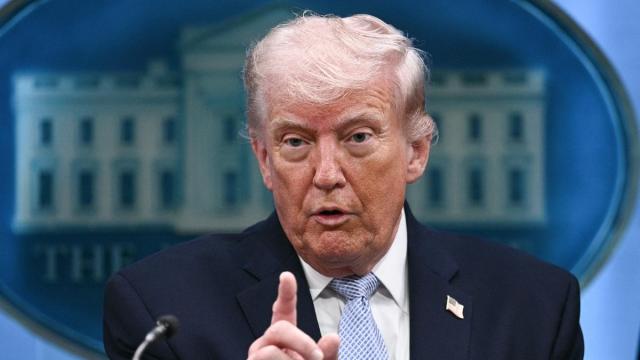
Saturday Night Live (SNL), a titan of American sketch comedy renowned for its sharp political satire, recently found itself embroiled in a familiar but particularly intense controversy. The show, which has fearlessly mocked presidents and politicians for decades, faced a torrent of criticism following a joke aired during its iconic Weekend Update segment. This specific incident involving a controversial Donald Trump joke reignited a simmering debate about the boundaries of comedy, the ethics of political satire, and the responsibility of media in a hyper-polarized world. The backlash was swift and widespread, prompting many to question whether this time, Saturday Night Live received backlash for a controversial Donald Trump joke that truly crossed a line.
The Joke Heard 'Round the Internet: A Reckless Remark?
The incident that sparked a digital firestorm occurred during a Weekend Update segment, co-hosted by Michael Che. Addressing the audience with his characteristic deadpan delivery, Che shared news that former President Donald Trump was reportedly planning to attend a performance of "Chicago" at the Kennedy Center. He then delivered the line that would quickly become the epicenter of controversy: "The president is going to the theatre, mean, what’s the worst that can happen?" The studio audience responded with laughter, but the online reaction was anything but amused.
For many viewers, Che's comment was an immediate and unmistakable allusion to one of the darkest chapters in American history: the assassination of President Abraham Lincoln. In 1865, Lincoln was shot by John Wilkes Booth while attending a play at Ford’s Theatre. The historical parallel, coupled with the current volatile political climate, struck many as deeply irresponsible. Critics were quick to point out that Trump himself has already survived one assassination attempt during his presidency, adding a grim and unsettling layer of reality to what was intended as humor. This context transformed the joke from an edgy remark into something perceived as dangerous, especially given the heightened political tensions and concerning rates of gun violence in the country.
The swiftness and severity of the backlash underscored a growing sensitivity around political discourse. What might once have been dismissed as dark humor was now seen through a lens of genuine concern for public safety and the potential incitement of violence. The internet, particularly platforms like X (formerly Twitter), became a battleground for opinions, with users expressing everything from shock to outrage.
Tracing the Outcry: Why the Line Was Crossed
The criticism directed at SNL and Michael Che was notable for its broad spectrum. Unlike many political debates that fall neatly along partisan lines, the outrage over this particular joke transcended typical political divisions. Both staunch Trump supporters and ardent critics of the former president voiced their displeasure, agreeing that the joke ventured into dangerous territory.
Commenters from across the political landscape echoed sentiments that while satire often pushes boundaries, there's a clear distinction between edgy comedy and remarks that flirt with promoting or normalizing political violence. One user articulated this widely held view, writing, "There’s dark humor but there’s also taking it too far humor." Many argued that joking about the killing of a sitting or former president, especially one who has been the target of actual violence, crosses a clear ethical line. It's not just about offending sensibilities; it's about the potential real-world implications in a country grappling with political extremism and alarming rates of gun violence.
Beyond the joke itself, the reaction of the studio audience also drew significant criticism. Their laughter and applause were perceived by many online as tone-deaf, reflecting a disturbing detachment from the gravity of the historical reference and the current political climate. This collective response further fueled the perception that SNL, and perhaps a segment of its audience, had lost touch with the serious implications of such humor. For a deeper dive into the ethical dimensions, you can explore Why SNL's Trump Theater Joke Sparked Widespread Outrage & Ethical Debate.
The Perils of Political Satire in a Volatile Climate
Saturday Night Live has historically prided itself on its role as a comedic mirror to American politics. From Chevy Chase's Gerald Ford to Tina Fey's Sarah Palin, the show has consistently used humor to lampoon, question, and critique leaders. However, the rise of Donald Trump presented a unique challenge to SNL's satirical arsenal.
In the early days of Trump's political ascent, SNL struggled to capture his unprecedented appeal and political style. Darrell Hammond's initial portrayal, while skilled, often depicted Trump as a "cartoon bully," failing to grasp the deeper phenomenon behind his movement. This changed dramatically with the introduction of Alec Baldwin's portrayal. Baldwin's caricature – complete with the "gargoyle scowl," "wavy blonde hair," orange spray-tan, and signature mannerisms like sniffing and pronouncing "huge" as "yuuge" – resonated powerfully with audiences. His impersonation, particularly during the 2016 election cycle, was seen as a much-needed "jolt" for the show, providing a comedic lens through which many processed the often-surreal political landscape. Baldwin's performance, alongside Kate McKinnon's Hillary Clinton, successfully skewered the intense debates and distinctive personalities of the era.
This history highlights SNL's powerful capacity for political commentary, but also its vulnerability when its satire is perceived as misfiring. The Michael Che joke, coming after years of intense and often divisive political humor targeting Trump, underscored the ever-thinning line between pointed mockery and perceived incitement. In an era where political rhetoric is often inflammatory and social media amplifies every comment, the responsibility of a major broadcast network like NBC and its flagship comedy program becomes magnified.
SNL's Legacy and the Unspoken Rules of Comedy
The controversy surrounding the Donald Trump joke places SNL at a crossroads, challenging its legacy as a fearless satirist. While the show has a long tradition of pushing boundaries, this incident suggests that public tolerance for certain types of humor, particularly those touching on political violence, may be diminishing or shifting in critical ways. The show's creators and performers must now grapple with the nuanced ethical landscape of modern political comedy.
As of the time of this article, Saturday Night Live has not issued an official response to the backlash. Neither Donald Trump nor any of his representatives have publicly commented on the joke. This silence, while perhaps strategic, leaves the debate open-ended, allowing public opinion to continue to coalesce around the question of comedic responsibility versus artistic freedom. The ongoing discussion delves deep into whether Che's comment was merely edgy comedy or a significant step too far, a topic further explored in SNL's Controversial Trump Joke: Was Michael Che's Comment a Step Too Far?
Navigating the Nuances: Insights for Responsible Political Commentary
The incident offers crucial insights for comedians, writers, and media outlets operating in today's charged environment:
- Context is Paramount: The political climate, historical precedents, and the personal history of the target are all critical factors that shape how a joke is received. What might be acceptable during a calmer period can be highly incendiary in a time of heightened tension.
- Intent vs. Impact: While a comedian's intent might be to provoke thought or simply get a laugh, the actual impact on the audience and the broader society can be vastly different. Responsible comedy considers not just what is said, but how it might be interpreted and what potential consequences it might have.
- The Power of the Platform: Major networks like NBC, and shows with the reach of SNL, carry a significant responsibility. Their jokes are not just entertainment; they contribute to the national discourse and can influence public perception.
- Audience Responsibility: The reaction of the studio audience also highlights the role of the consumer of comedy. Uncritical laughter can inadvertently normalize or endorse humor that many find deeply problematic.
Ultimately, the challenge for political satirists is to remain sharp, insightful, and relevant without inadvertently fueling the very divisions and dangers they seek to lampoon. It requires a delicate balance of audacity and empathy, a willingness to push boundaries while understanding where those boundaries serve a crucial ethical purpose.
The controversy surrounding Saturday Night Live's controversial Donald Trump joke serves as a potent reminder that even a show built on pushing buttons must constantly re-evaluate where the line stands. In an era where political violence is a tangible concern and public discourse is often vitriolic, the power of humor, whether for good or ill, has never been more significant. The debate over Michael Che's comment will likely continue to reverberate, adding another complex chapter to SNL's enduring legacy of political satire and solidifying this moment as a key instance where Saturday Night Live received backlash for a controversial Donald Trump joke that truly ignited a national conversation about comedy's ethical limits.