Why SNL's Trump Theater Joke Sparked Widespread Outrage & Ethical Debate
Saturday Night Live (SNL) has long been a cultural touchstone, famous for its sharp political satire and ability to skewer the powerful with humor. Yet, even for a show renowned for pushing boundaries, a recent segment during its Weekend Update sparked an intense and widespread backlash, igniting a crucial ethical debate about the limits of comedy. The incident, centered around a controversial joke referencing former President Donald Trump, quickly spiraled from a chuckle in the studio audience to a firestorm across social media, challenging perceptions of what constitutes acceptable satire in an increasingly polarized world.
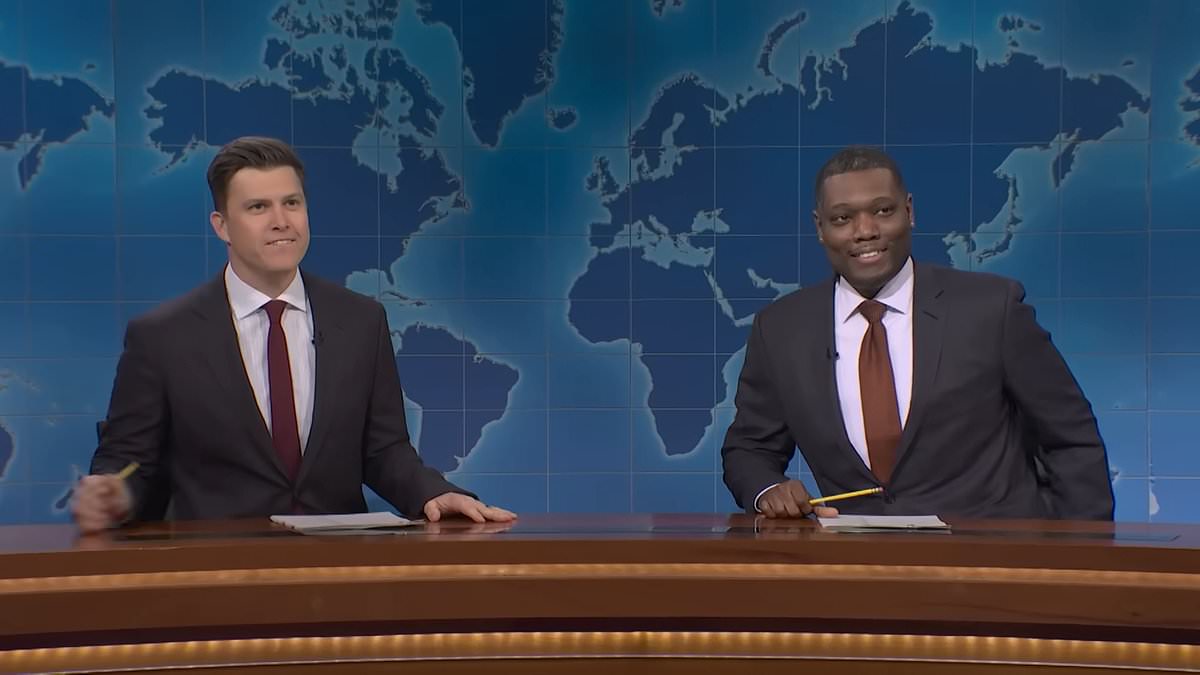
The controversy emerged when co-host Michael Che made a comment about Donald Trump's reported plan to attend a performance of the musical Chicago at the Kennedy Center. Che quipped, "The president is going to the theatre, mean, what’s the worst that can happen?" While the live audience responded with laughter, the reaction online was swift and overwhelmingly negative. Many viewers immediately recognized the implicit, chilling reference to the 1865 assassination of President Abraham Lincoln by John Wilkes Booth at Ford’s Theater. This historical echo, combined with the grim reality that Donald Trump himself had previously survived an assassination attempt, rendered the joke dangerous rather than humorous for a significant portion of the audience. The incident underscored that even for a show built on provocation, certain lines, especially those touching on political violence, carry unprecedented weight in today's climate.
The Joke Heard 'Round the Internet: Unpacking Michael Che's Comment
The seemingly innocuous question posed by Michael Che — "what’s the worst that can happen?" — belied a deeply unsettling subtext that resonated far beyond the studio. For many, the connection to Abraham Lincoln's tragic fate was unmistakable. Lincoln's assassination during a play at Ford's Theater remains one of the darkest moments in American history, a stark reminder of the fragility of leadership and the dangers of political extremism. By invoking this historical precedent, the SNL joke tapped into a raw nerve, particularly given the contemporary political landscape.
Critics argued that the comment wasn't merely "dark humor" but ventured into a realm of reckless insensitivity. The United States has grappled with alarming rates of gun violence, and political tensions are arguably at an all-time high. In such an environment, joking about a sitting or former president's death, even indirectly, can be perceived as irresponsible and dangerous. This sentiment was amplified by the fact that Donald Trump had already been the target of an assassination attempt during his presidency. For many, this real-world context transformed the joke from edgy satire into a callous disregard for potential consequences, particularly for the safety and stability of democratic institutions.
The outrage wasn't confined to any single political demographic. Commenters from across the political spectrum voiced their displeasure on platforms like X (formerly Twitter). One user articulated a common sentiment, stating, "There’s dark humour but there’s also taking it too far humour." Even individuals who were not supporters of Donald Trump felt compelled to speak out, arguing that joking about political violence, regardless of the target, crosses a clear ethical boundary that should not be breached by mainstream media outlets, especially those broadcast by NBC. The applause from the studio audience was also singled out, with many online critics labeling their reaction as "tone-deaf" and indicative of a disconnect between live show dynamics and broader public sensitivities. This immediate and strong backlash for a controversial Donald Trump joke highlighted how quickly public perception can turn.
Ethical Lines and the Evolving Limits of Satire
SNL has a storied legacy of political satire, often using humor to question, mock, and even influence public opinion regarding political figures. From Chevy Chase's Gerald Ford to Tina Fey's Sarah Palin, and famously, Alec Baldwin's portrayal of Donald Trump, the show has consistently pushed boundaries. Baldwin's transformation into Trump, with his distinctive mannerisms and catchphrases like "yuuge" and "Ji-na," provided the show with a much-needed jolt during a crucial election cycle. His satirical take captured the essence of the "unprecedented political movement" that Darrell Hammond's earlier, more cartoonish Trump had failed to embody. This historical context begs the question: how did a show with such a rich history of nuanced political commentary arrive at a joke widely perceived as a dangerous misstep?
The core of the ethical debate lies in discerning where satire ends and irresponsibility begins. Satire's power often comes from its ability to provoke, but there's a delicate balance. When a joke, even an indirect one, hints at violence against a public figure, it can be seen as legitimizing or normalizing such thoughts in a fragile social climate. This isn't merely about political correctness; it's about the potential real-world impact of media portrayals.
Key considerations in this debate include:
- The Context of High Tensions: In a deeply divided nation, where political rhetoric frequently borders on incendiary, media platforms bear a heightened responsibility to avoid content that could be misconstrued as inciting violence or promoting harmful ideologies.
- The Target of the Satire: While SNL has always "punched up" at those in power, joking about a leader's death is widely seen as crossing a different kind of line than mocking their policies or personality quirks.
- Audience Interpretation: Humor is subjective, but when a significant portion of the audience, including those who disagree with the target, perceives a joke as dangerous, it indicates a failure in comedic judgment or an underestimation of public sensitivity.
- The Role of Broadcasters: NBC, as the network airing SNL, also faced scrutiny for allowing the segment to air. This raises questions about editorial oversight and the responsibility of networks to uphold ethical standards even in live comedic programming.
This incident serves as a stark reminder that even a beloved institution like Saturday Night Live received backlash for a controversial Donald Trump joke, highlighting the constantly shifting ethical landscape for creators of political humor.
Navigating Comedy in a Polarized Landscape: Tips for Responsible Satire
The controversy surrounding Michael Che's comment serves as a crucial case study for comedians, writers, and broadcasters operating in an increasingly volatile political environment. While satire's role is to challenge and provoke, it also carries the responsibility of understanding the potential impact of its words. Here are some insights and considerations for navigating the complex world of political comedy:
- Understand the Emotional Temperature: Before delivering a controversial joke, gauge the current socio-political climate. Are tensions high? Are there recent events that make certain topics particularly sensitive? A joke that might be merely edgy in one context could be reckless in another.
- Distinguish Between Punching Up and Punching Down: Traditional satire "punches up," targeting those in power. However, jokes hinting at violence against any political figure, regardless of their power status, can blur this line and appear to punch at the very fabric of democratic order.
- Consider All Interpretations: Even if the comedic intent is harmless, consider how the joke could be perceived by different segments of the audience, particularly those who might be more sensitive or prone to misinterpretation. The power of a joke lies not just in its delivery but in its reception.
- Beware of Unintended Endorsements: A joke, even if meant as pure satire, can inadvertently align with or legitimize dangerous narratives or sentiments, especially when it touches on highly charged topics like political violence.
- Embrace Nuance Over Shock Value: While shock can be an element of comedy, relying solely on it can diminish the intellectual depth of satire. Truly effective political humor often comes from clever observation, nuanced critique, and sharp wit, rather than mere provocation.
- Review and Reflect: For writers and producers, establishing a robust review process for particularly edgy material can be vital. Asking "Is this joke likely to incite, normalize, or be perceived as condoning violence?" is a critical self-check.
The incident demonstrates that the expectations placed on public figures and media outlets are constantly evolving. While SNL has not issued an official response, the debate itself offers valuable lessons. Neither Donald Trump nor his representatives commented on the joke, but the public discourse continues to underscore the fine line between edgy comedy and comments deemed to have gone too far.
Conclusion: The Enduring Challenge of Satire in a Divided Age
The Saturday Night Live backlash over Michael Che's controversial Donald Trump joke stands as a potent reminder of the challenges facing political satirists in today's hypersensitive and polarized world. While SNL has historically thrived on irreverence and an almost sacred right to mock those in power, this particular incident revealed that certain boundaries, especially those touching upon political violence, are considered sacrosanct by a broad public. The widespread outrage, cutting across political affiliations, signals a collective demand for greater responsibility in comedic content, particularly from platforms with significant cultural influence.
The ethical debate ignited by the joke forces us to confront difficult questions about the limits of free expression, the potential real-world impact of media, and the responsibility of entertainers. As the political landscape continues to fracture, the task of delivering humor that is both incisive and ethical becomes increasingly complex. For now, the legacy of this controversial moment for Saturday Night Live will likely be defined by the ongoing conversation it sparked, urging a deeper consideration of the power of words and the profound implications of "what's the worst that can happen?" in an age where comedy often feels like a minefield.